
Why Chance-Based Mechanics Keep Us Hooked.
The Nature of Thrill and Excitement
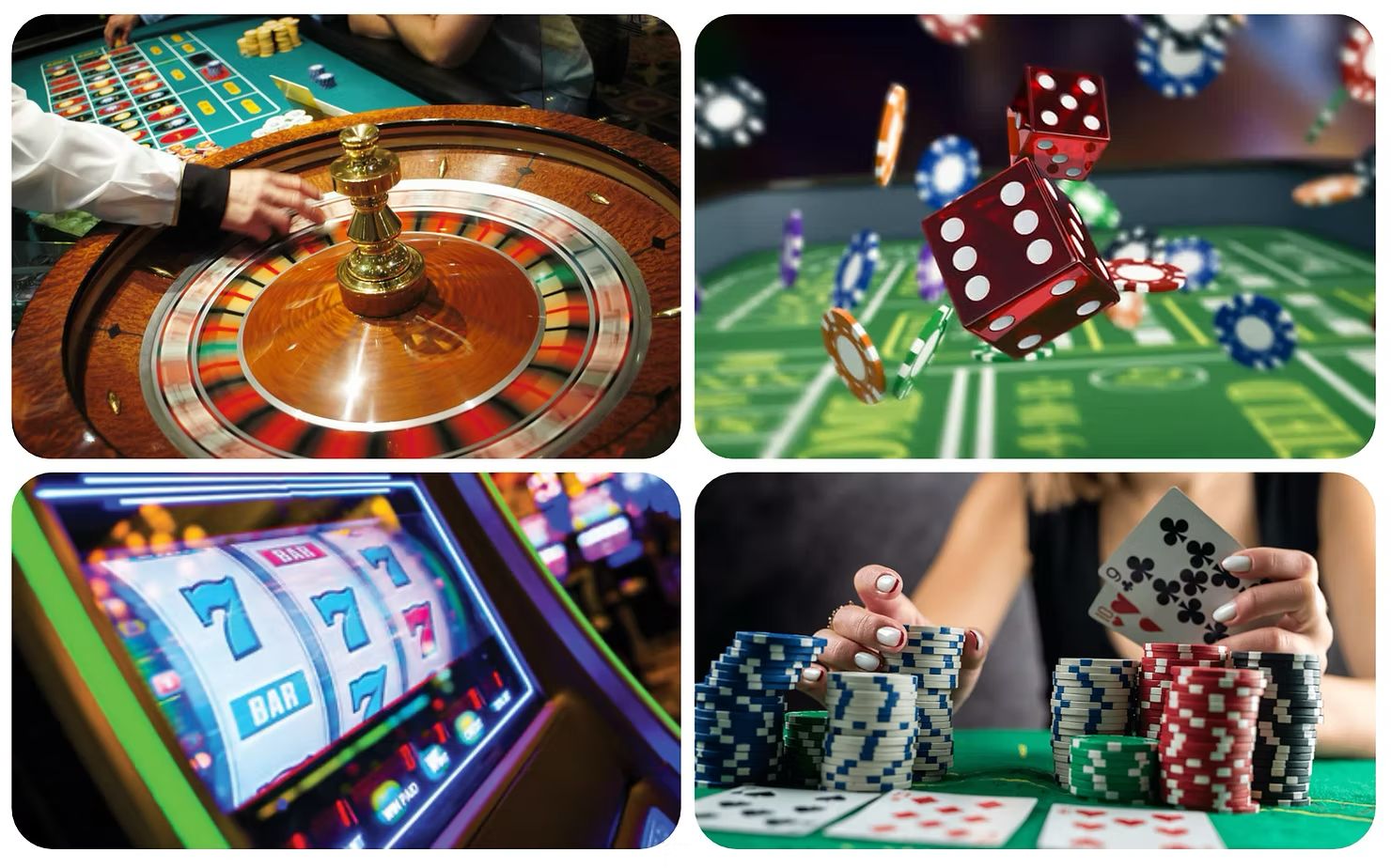
When most people hear thrill, they immediately think of casinos – slots, gambling, risky bets. But that’s just the loudest and most obvious example. In reality, thrill is much broader than gambling.
Thrill is about waiting. It’s about risk, belief and probabilities.
Thrill (excitement) is not about winning. Its core is a tense mix of 3 feelings:
- Anticipation – “Something good might happen.”
- Risk – “But maybe it won’t.”
- Hope – “I’ll try anyway.”
Thrill lives between certainty and hopelessness.

Anticipation
Have you ever had the feeling that waiting for something – a vacation, a trip, a holiday – was just as exciting and emotionally intense as the event itself?
That feeling is Anticipation. It’s a powerful emotional state
From a psychological perspective, dopamine is released not when we receive the reward, but when we expect it. The real thrill there doesn’t come from the final result – it comes from the moment before it.

What’s funny is that regardless of the outcome, it makes you want to keep going:
- If you WIN, it works as positive reinforcement:I won once, so I might win again.
- If you LOSE, thrill shows up differently: It didn’t work out this time – but it will next time. And besides, I need to win it back.
Near Miss, FUUUU-factor
A loss often turns into:“It didn’t happen this time – but it will next time. I can’t stop now.”
Your brain starts to believe that because the reward didn’t drop now, the chance of it dropping next time is higher – even though it isn’t.
This belief becomes even stronger with a near miss.
When you’re just one step away – your brain doesn’t read it as failure, but as progress.
Almost winning feels closer to winning than to losing!

FUUUU – I almost had it!
- when the combination needs one more move,
- the jackpot stops right before the winning symbol,
- the collection shows 9/10,
- or you lose when the boss has 1% health left
It Finally Hit
A win is more than a reward. It’s purest positive reinforcement.
I took an action → I believed → I waited → I won.
it teaches your brain an important lesson: It worked once. That means it can work again.
Games amplify this moment on purpose: celebratory sounds, slow-motion reveals, exaggerated rewards screens.
But there’s a special kind of win that feels even stronger.
The ‘It finally hit’ moment.
- When the chance was low.
- When you were already making peace with a loss.
- And then – luck suddenly lands on your side.

That moment multiplies the emotional effect.
- When the last card completes a ‘Full House’ in poker.
- When the last move in a match-3 level triggers a perfect booster chain.
- When a long-awaited legendary finally drops from a pack
The Chance to Win Big
It needs the possibility of a big one.
People don’t think in expected value or real odds. They believe in the best possible outcome. A rare big win reshapes perception. Even if small wins are far more likely.

Casinos know this well. When someone hits a jackpot – a bell rings.Everyone hears it. Everyone sees it.
The message is simple: Big wins are real. It can happen.
This feeling fuels stories: What if I’m next?
Skinner Box
The Skinner Box is about rewards that don’t show up every time.
- If you get a reward always → it becomes boring.
- If you never get it → you stop trying.
But when the reward appears sometimes – unpredictably – you want to try again.
You don’t know when it will happen.
But you believe it can happen

Reward after an unpredictable number of actions.
📌 Not every tap → reward.
📌 Not every 5 taps → reward.
📌 But maybe the next one.
Monopoly GO!
One of the Best Chance-Based Systems
MonopolyGO has been in the TOP-30 for a long time and continues to hold key positions.
- Its IAP Revenue remains stable at around $100-125M per month
- While monthly Downloads sit at roughly 1.5M


Monopoly GO: Game of Chances
At first glance, Monopoly GO! looks simple and familiar.
Roll the dice → Move forward → Something happens.

But the game isn’t just about Monopoly IP. It’s about what might happen next. It keeps tension alive.
Its core loop is built on probability, delayed outcomes, and emotional tension – the same forces that power slot machines, but wrapped in social systems, progression, and daily goals.
Monopoly GO! doesn’t ask players to master mechanics.
It asks them to wait, hope, and believe.
How This Analysis Was Done: Researcher Portrait

To break Monopoly GO! down properly, the analysis was based on hands-on gameplay rather than theory alone.
- 20 Locations completed
- 14,550 Dice rolled
- 3 In-App purchases made
This level of exposure provides a solid view of the core loop, LiveOps structure, and monetization beats – without drifting into late-game edge cases.
Now, let’s look at how the game actually works.
Core Gameplay: The Ups and Downs
Looking at 500+ moves, the dice balance shows a clear ‘saw-tooth’ pattern, with regular spikes and drops typical of difficulty tuning. Notably, these spikes don’t come only from

Purchases – many are driven by Events and a well-balanced income-outcome flow design, creating constant tension and relief.
Phase 1: Before the 1st Purchase
The player starts with 30 dice, but the balance quickly stabilizes in a 50-100 range

Soon after, dice are almost fully depleted – until a location upgrades, unlocks daily tasks and events, creating a sharp spike up to ~200 dice.
The pattern then repeats:near depletion → progression unlock → temporary relief → back to pressure.
This sets the rhythm early – teaching the player that running low is expected, and recovery comes through continued play and progression.
Phase 2: Before the 2nd Purchase

After making a purchase, the peaks and drops continued:
- the player dropped to nearly 300 dice, rose again to 400+
- then dropped close to 100 – and eventually recovered to almost the same level as right after the purchase – 500+ dice
Even after a purchase, the tension remains.‘Lucky’ moments and dice inflows are now driven primarily by events rather than spending.
Notably, these event-driven inflows grow over time – especially when compared to the pre-purchase phase
Phase 3: Before the 3rd Purchase
Here, it’s also clear how the game almost drains the player down to zero – and then suddenly injects ‘luck’, pushing the balance even higher than it was right after the purchase.

These sharp surges are what amplify thrill and excitement, while the drops prevent the experience from becoming ‘boring’: flat or predictable – making every peak feel more rewarding.
The Full Progression
The full progression shows a constant cycle of pressure and release.
Near-depletion creates tension, while sudden ‘lucky’ spikes reignite thrill and reinforce the urge to keep playing.

Core Gameplay
Mechanic Deconstruction
Board Tiles Overview
Let’s break down the board tiles themselves – what types exist and how they convey thrill and excitement:

- Property: Money tiles – basic income used for Meta progression
- Event tiles – feed LiveOps progress
- Bonus tiles – visually highlighted, create excitement spikes
- Negative tiles (Jail, Taxes) – apply pressure and resource drain
- Chance Card tiles – introduce uncertainty and surprise outcomes
- Community Chest – social layer, linking individual turns to shared systems
- Other (GO, Free Parking) – relief and reset points
Tile Landing Frequency
The number of tiles and the overall board structure remain the same across locations.

When looking at tile distribution:
- around 50% of landings are standard Property: Money tiles with basic payouts
- while the other 50% involve tiles with special mini-games, events, or modifiers that add variation and excitement.
Property Tiles

When players upgrade buildings, they unlock Color Sets – houses placed on property tiles.
These upgrades directly affect rewards in 2 ways:
- Rent from other players – Other players are distributed across multiple tiles. When they land on a property tile you own, they pay Rent – and the more upgraded the property is, the higher the rent they pay.
- Color Wheel bonus – Once all property tiles of the same color have a hotel, an additional Color Wheel bonus becomes available
These 2 mechanics creating another anticipation-driven reward opportunity.
Wheel of Fortune: Visualization
Wheel of Fortune is one of the most powerful and widely used chance-based mechanics – but only when it’s designed correctly.
What’s the first thing players notice when the Wheels appear?

For the 1st Wheel, it’s the Safe at the center that immediately catches your eye. It’s instantly perceived as the most valuable and most desirable reward.
The 2nd Wheel highlights the 3 largest prizes
And that’s the trick.
- You add a few juicy rewards to spark excitement – and then you visually emphasize them so they dominate attention.
- In reality, the average payout here is around 900K. But let’s be honest – no one spins a wheel thinking about averages.
- Emotionally, players see a chance at the jackpot – 4M+. And that is what makes the spin exciting.
Wheel of Fortune: Balance
Let’s talk about What high volatility actually means and why it works?

Here are 2 reward systems: Both distributions have the same expected value (mean) = 30.
- When variance and volatility are low, outcomes stay close to the average.
- When variance is high, results are spread across a much wider range.
They feel completely different
- The blue one?It’s predictable – and safe. But also… kind of boring
- The red one? It’s alive – you Win big, you Lose hard – you feel something
Shut Down + Shield
Shutdown is one of the bonus mechanics
Beyond its social aspect, Shutdown adds a strong layer of Probability and Anticipation:
- the size of the reward depends on whether the opponent has an active shield or not
- while the animation plays – the crane swinging toward the building – the player is already mentally placing a bet on the outcome.
- According to the observed data, 60% of Shutdowns resulted in the maximum reward, while the remaining 40% were blocked by shields.

There’s also a 2nd layer to this system: Acquiring Shields.
- Shield icons are scattered across the board, placed on top of other tiles. Landing on them grants shields, which means that when a player runs out of shields, they actively hope their next roll lands on one
Bank Heist: Why It Works
Heist is a short, high-intensity mini-game built entirely around anticipation and chance.
Players open hidden tiles, trying to match 3 identical symbols to determine the payout – Small Heist or Large Heist. Every tap is a Micro-Bet

The mechanic amplifies excitement through:
- Anticipation on Every reveal
- Near-miss moments (2 matches out of 3)
- Illusion of control – you choose the tiles
- Escalating tension as matches build up
- Big-number framing – the reward is visible upfront
Notably, across ALL plays, the lowest-tier prize appeared in only 13% of cases. This could be a coincidence, but more likely it’s a deliberate tuning choice – reducing the frequency of ‘bad luck’ outcomes to avoid making players feel unlucky
Bank Heist: Why Flow Matters
Example A
1–1–3–2–2–3–2
- The player starts by revealing 2 TOP-tier symbols, immediately creating strong tension: every next reveal feels like it could complete the best prize.
- Each click reinforces the belief that the next one will hit – but the final outcome lands on a mid-tier reward.
Example B
3–3–2–1–1–2–1
- Here, the 1st reveals point to a LOW-tier result, gradually killing confidence.
- Even after a few more picks, hope remains low.
- Then, at the very end, the TOP prize hits – a classic ‘it finally landed’ moment, when hope was almost gone but luck turns everything around.
Example C
3–3–1–2–2–1–3
- After the previous experience, even a bad early start doesn’t fully break belief.
- The player now remembers that a top prize is still possible – reinforcing long-term trust in the system.
Example D
1–3–2–2–1–3–2
- A more balanced reveal pattern: no strong bias early on, but steady intrigue until the end.
- With 2 symbols of each type, anticipation stays alive because any outcome remains possible.
Bank Heist: Extra Excitement
The game introduces a limited-time bonus event where, for the limited time, players have a chance to trigger Mega Heist – further intensifying excitement.
Thrill is amplified through stacked probability layers:
- Chance to land on a specific board tile (only two exist)
- Chance to trigger a Mega Heist instead of a regular one
- Chance to Win Big inside the Mega Heist itself

Each layer builds anticipation before the previous one fully resolves.
Visually, the effect is reinforced even more:
- Small rewards are replaced by noticeably larger ones, supported by bold animations, brighter colors, and a distinct background.
Together, these elements transform a familiar mechanic into a short-lived, high-stakes moment
Chance Card
There are several types of Chance cards in the game – but the player never knows in advance which one they’ll get.
When landing on a Chance tile, the player draws a card and only then reveals its effect. This delay creates immediate intrigue and anticipation.

Each draw can result in 1 of 3 reward types:
- Cash
- Dice
- Or one of the Bonus Games
.. turning every landing into a small suspense moment driven purely by uncertainty.
Community Chest
Community Chest is primarily a social feature, but it works from 2 sides at once:
- Players need to complete tasks together with a friend → in order to earn keys.
- In the core gameplay loop, landing on a Community Chest tile of the corresponding color fills the shared progress bar for that chest.

Because both conditions are required, the mechanic naturally increases the desire to land on Community Chest tiles – turning otherwise neutral board spaces into highly anticipated targets.
Lucky Coin: Press-Your-Luck
Lucky Coin is another example of a chance-driven mechanic – a classic press-your-luck design.
On each step, the player flips a coin:
- Each flip either grows the reward – and the tension – or ends the run.
- However, the strength of this mini-game lies in real risk: without the possibility of loss, thrill disappears.
Another point – balance matters:
- In practice, around 35% of runs ended on the very 1st step, resulting in a reward of ‘0’.
- From a purely mathematical standpoint, this makes sense – the chance to fail on the first flip is 50%. But emotionally, this is one of those cases where slightly unfair probabilities → could create a better player experience.
Walking away with nothing – especially when the run visually promises five steps – feels frustrating rather than thrilling.
Jail: Punishment or Hidden Reward?
The board includes not only positive, but also ‘negative’ tiles – although they aren’t truly negative once you look closer.
- When landing in Jail, the player gets a chance to escape by rolling a double on 2 dice within 3 attempts. Each roll becomes a mini moment of anticipation – another chance to get away.
- If the player does roll a double, they don’t just escape –they’re also rewarded with extra dice.

What’s especially interesting is the actual outcome distribution:
- 27% of the time, escape happened on the 1st roll
- 53% of the time, on the 2nd or 3rd roll
- Only 20% of the time did the player end up paying the fine
Statistically, the truly negative outcome is rare.Most of the time, Jail turns into a fun escape moment – often with a reward – reframing what looks like punishment into another anticipation-driven experience.
Other Tiles
Free Parking – neutral, even ‘boring’ tile: gives nothing, takes nothing, and is the least exciting space on the board

GO – the anchor tile: always rewards the player, even when passed, providing consistency and relief

Taxes – removes a small, symbolic amount of money to add light tension without real punishment

Time Limited Events
Group 1: Location Boosters
They encourage the player to play as actively as possible to fully leverage the booster’s potential. To buy more dice in order to play longer – and to spend more in order to play at higher stakes.

Group 2: Focusing Boosters
It highlights the corner tiles +Even making Free Parking feel relevant

It makes hunting for Friend-related tiles more engaging

Shifts focus from single tiles to Dice combinations, adding another strategic layer. It makes hunting for Friend-related tiles more engaging

It encourages higher-stakes play, making players
Spend dice even faster

Group 3: Mini-Game Boosters

This type of booster makes already thrill-driven special tiles and bonus games even more impactful, Multiplying Anticipation around landing on them. There are only a few of these tiles on the board – which makes them feel even More Valuable.